What are Crossvents?

In foundation repair, crossvents (or crawl space vents) are openings in the foundation walls that allow air to flow through the crawl space, creating a cross-breeze to dry out moisture, prevent mold/rot, and deter pests, crucial for pier-and-beam homes, though modern solutions often involve sealed, conditioned crawl spaces for better moisture control. They function as a traditional, code-compliant way to keep the under-floor area dry by letting outside air circulate and carry moisture away, but can sometimes introduce more humid air, making proper sealing and conditioning a better long-term fix, especially in humid areas. 

Crossvents from Bedrock Foundation Repair
How They Work
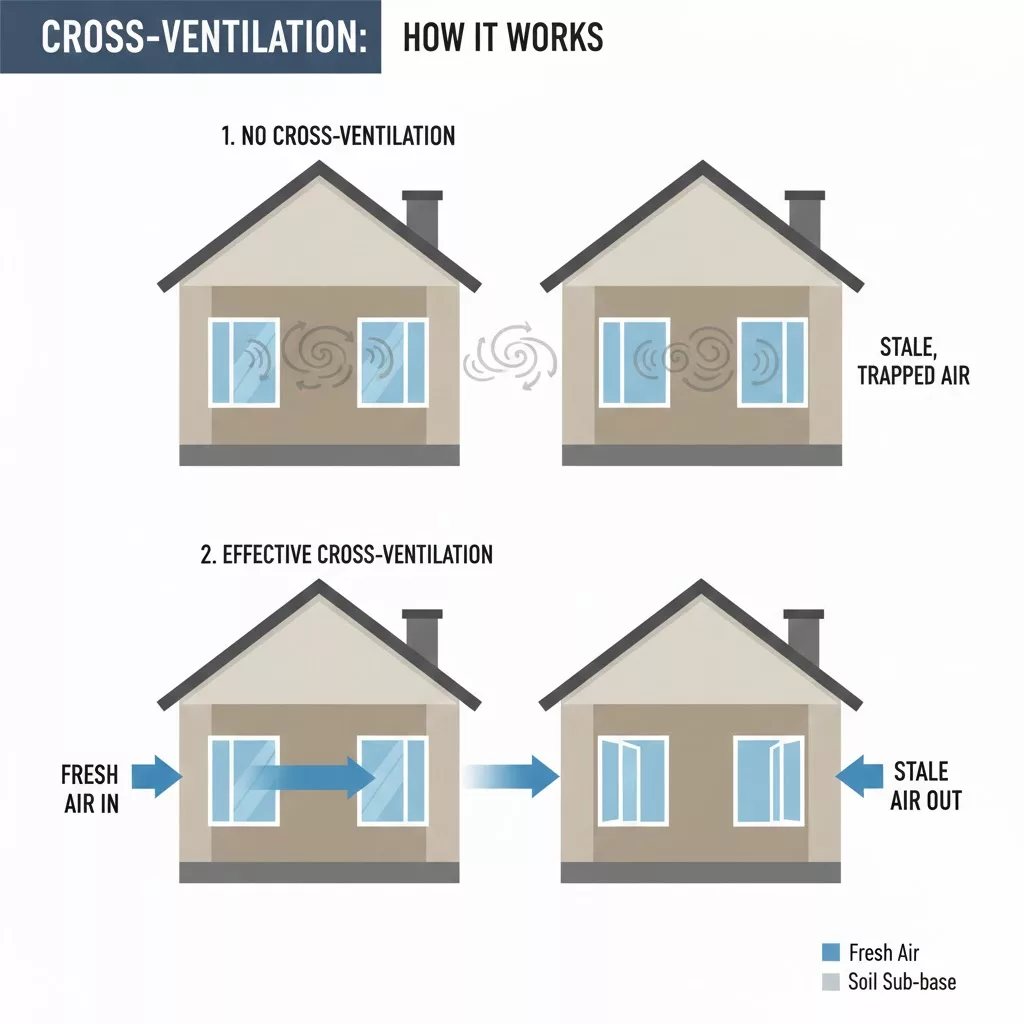
  • Natural Airflow: Wind blowing across one vent forces air out of another, creating a natural ventilation system.
  • Moisture Control: This air movement helps evaporate moisture from the soil and wood framing.
  • Code Requirement: Building codes often mandate a certain amount of vent space (e.g., 1 sq. ft. per 100 sq. ft. of floor space) and placement near corners.
Problems They Address (and Sometimes Cause)
  • Prevents: Mold, mildew, wood rot, termite/pest issues, and musty smells by keeping the space dry.
  • Can Cause: In humid climates, warm, moist air enters and condenses on cool surfaces (like pipes or wood), leading to more moisture problems than if sealed.
Foundation Repair  Ventilation
  • Inspection: Foundation repair specialists check vents for proper function, adequate sizing, and potential blockages.
  • Correction: If vents are inadequate or leading to moisture issues, repair often involves:
    • Sealing & Encapsulation: Closing vents and installing a vapor barrier (plastic) on the soil, often with a dehumidifier.
    • Adding Vents: Installing more or better-designed vents where needed.
    • Sealing Low Vents: Blocking vents that allow bulk water intrusion with concrete or glass blocks. 

CROSSVENTS AND CROSS VENTILATION

It is important to have at least 1 square foot of ventilation for every 150 square feet of home, in the lower level.

With changes in atmospheric pressure, air is sucked in from the vents and across the crawlspace, blowdrying the lumber. Screens over the vents block too much of the air, especially if paint or dust is stuck the the screens.  Too many bushes can also block air from traveling and being sucked through the vents.

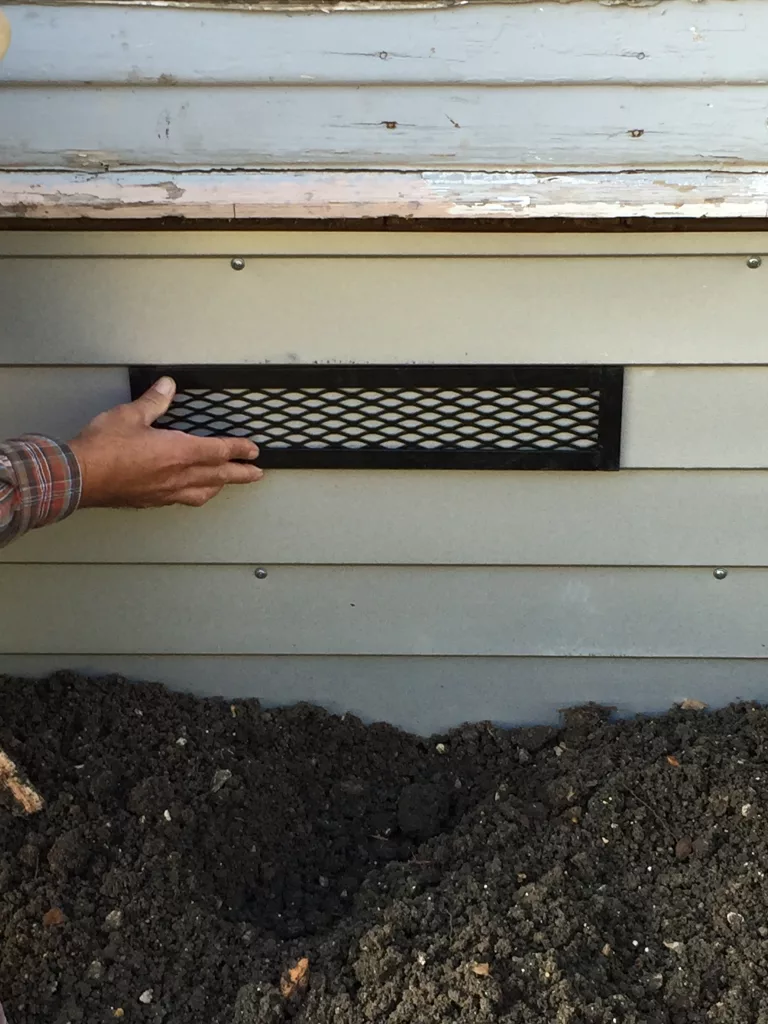
Bedrock custom makes vents to match the size of the outside siding, or brick, with large openings to allow more air to pass:

Most generally they are painted black, but there is no additional cost if painted white, and some clients wanted them painted in copper, which makes them look very antique and historic.

Note:  Crossvents usually do not dry out the soil under a structure very much. Establishing positive drainage on the perimeter of the structure should alleviate water penetration into the crawlspace. A house that smells musty, is usually a ventilation problem.  That really neat musty smell of old houses is really mold and bacteria growing in the moisture and rotting wood.  Have at it and get sick.

For homes when it is difficult to install enough proper crossvents, a FORCED AIR SYSTEM is installed, and MUST  be installed to establish a NEGATIVE PRESSURE in the crawlspace. A positive pressure from fans pushes the mold and bacteria into the home, affecting the occupants. A forced air system uses ducts to suck air out and to the outside of the structure. A forced air system usually costs about $2500, for a home less than 3,000 square feet in the lower level, but a second system should be installed for larger homes.

A crawlspace with less than 18” crawlspace under the floor joists is not enough room for air to flow freely, and should be excavated.


Bedrock Crossvents:

Common sizes are 4” x 16” or 6” x 16”, and for brick vents 8” x 16′‘ is common.

  • Crossvents usually cost $400 each, installed.
Crossvent made by Bedrock Foundation Repair.