Frequently Asked Questions: Pressure Grouting
How long does the process take?
Most residential pressure grouting projects are completed in just one day. Because the equipment is compact, we can work efficiently without turning your yard into a major construction site.
Is pressure grouting a permanent fix?
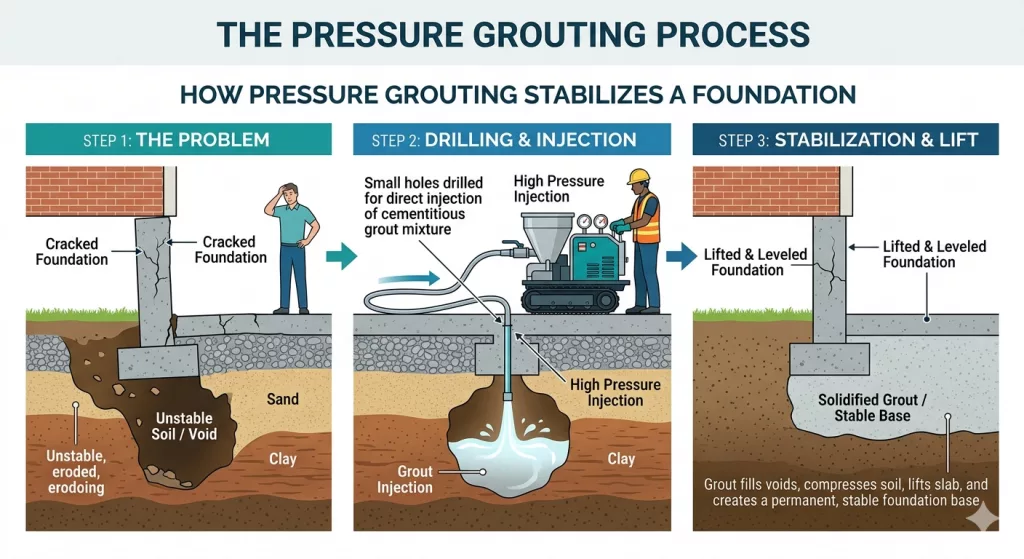
Yes. The grout mixtures we use at Bedrock Foundation Repair, LLC are designed to be as strong as or stronger than the surrounding soil. Once the grout cures, it creates a stable, non-erodible base that prevents future settlement in that specific area.
Will it damage my landscaping?
Pressure grouting is one of the least invasive foundation repair methods. We only need to drill small, strategically placed holes (usually about 1.5 to 2 inches in diameter) to inject the material. Once we’re finished, these holes are patched and smoothed over.
How soon can I walk or drive on the surface?
In most cases, you can walk on the area immediately. For heavy vehicle traffic on driveways or garage floors, we typically recommend waiting 24 to 48 hours for the grout to reach full weight-bearing strength.
Ready to Stabilize Your Foundation?
Don’t wait for a small void to become a massive structural problem. Protect your home’s value and your family’s safety with the experts who know the local soil best.
Stop the sinking. Start with Bedrock.
[Schedule Your Free Foundation Inspection Today]
Call us at 214-824-1211 or fill out our online form to speak with a structural specialist.